


At WashU Medicine: 1994-present
The Barbara and Reuben M. Morriss III Distinguished Professor of Neurology
David M. Holtzman, MD, has fundamentally reshaped our understanding of Alzheimer’s disease. A world-renowned physician-scientist, he investigates the biological forces driving neurodegeneration — from genes and immune cells to sleep and the gut microbiome.
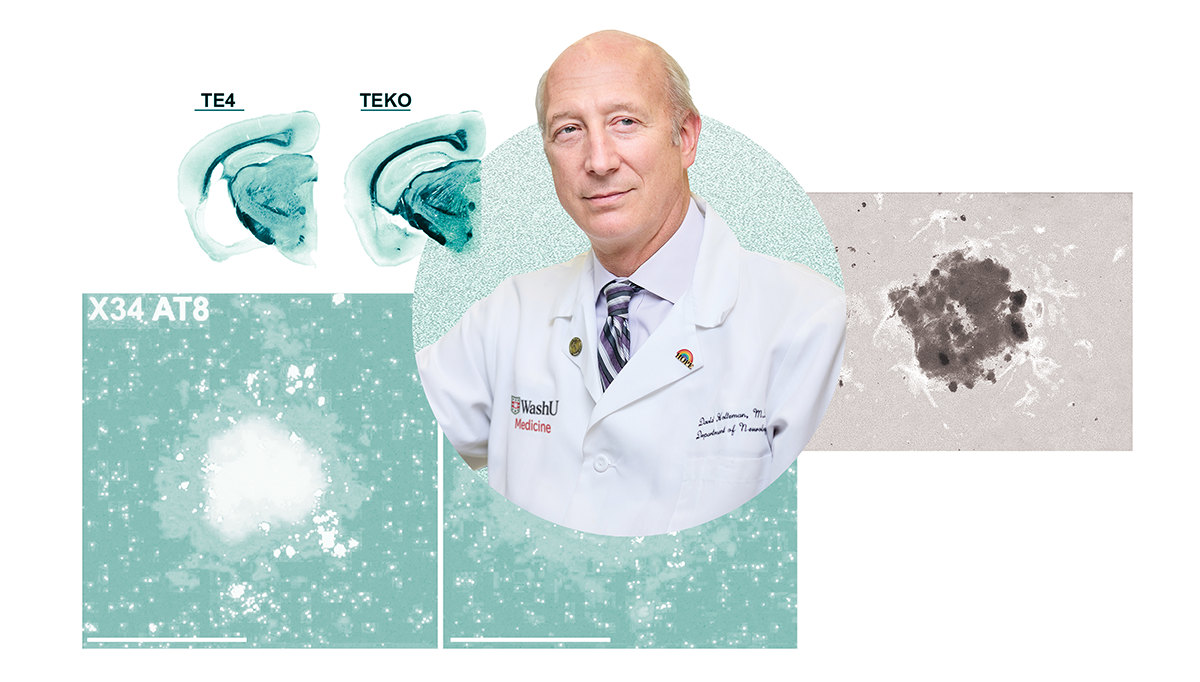
He has extensively studied the strongest known genetic risk factor for Alzheimer’s and related neurodegenerative diseases, which was also the first gene linked to an increased risk of Alzheimer’s. Specifically, Holtzman has discovered how the protein this gene produces, called APOE, influences various aspects of the brain pathology underlying these conditions.
His lab discovered how the brain’s resident immune cells — microglia — interact with T cells in ways that drive neurodegeneration due to the accumulation of a protein called tau. In a mouse study, they uncovered that when T cells enter the brain, they worsen damage and cognitive decline, and that removing or redirecting these cells can protect brain function. His team also found that activating microglia with an antibody targeting a particular form of APOE reduces the buildup of amyloid plaques — the protein clumps that damage brain cells — opening new avenues for Alzheimer’s treatment.
Moreover, his team revealed how poor sleep accelerates the harmful buildup of proteins and how the gut microbiome influences immune responses that can damage the brain — insights that point to entirely new ways of preventing or treating neurodegeneration.
Holtzman’s discoveries have transcended the lab. With WashU Medicine colleague Randall J. Bateman, MD, he co-founded C2N Diagnostics, creating the first blood test to detect Alzheimer’s — a breakthrough that is advancing diagnosis and treatment worldwide.
Driven by a commitment to pursue every promising angle, Holtzman continues to push the boundaries of science and patient care while shaping the future of neurodegeneration research and treatment.
Published in the Autumn 2025 issue