


For one Illinois mother carrying twin boys with a life-threatening diagnosis, a telemedicine model turned the scariest moment of her pregnancy into a story of survival — reshaping what rural maternal care can look like.

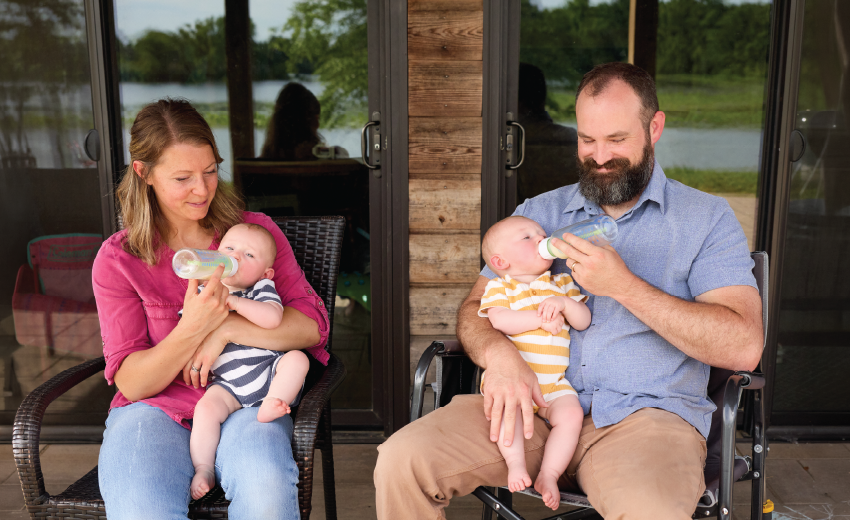
Jennie Gibbs was 15 weeks pregnant with identical twin boys when her doctors found a life-threatening problem: the twins shared a placenta, and a tangle of abnormal blood vessels was sending too much blood to one baby and too little to the other. Left untreated, the condition could kill one or both boys.
“We didn’t know if we would be bringing babies home at the end of this pregnancy,” Jennie recalled. “We were in a dark place in our lives.”
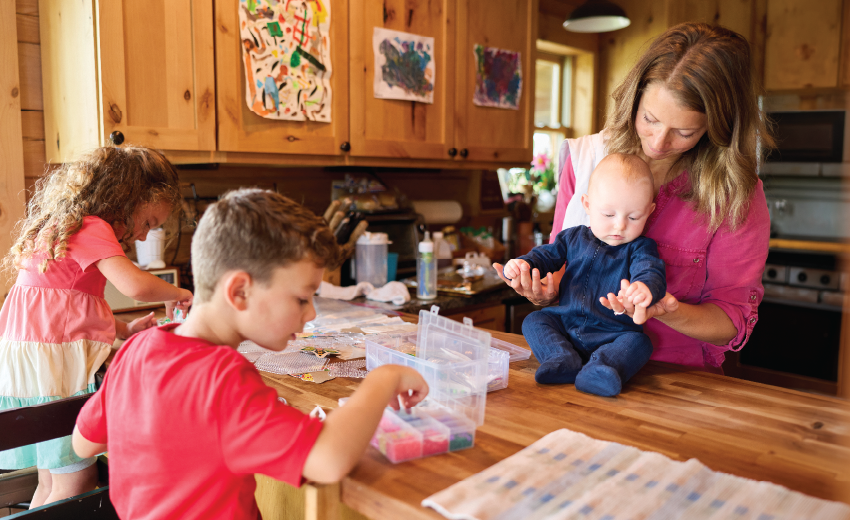
For a family in rural Benton, Ill., with three kids under age 6 at home, that kind of diagnosis usually means traveling over two hours each way for every appointment, racking up gas costs and time away from work and family.
It’s a dilemma playing out across rural America, where access to specialized pregnancy care is vanishing. As rural hospitals continue closing labor and delivery units, families with high-risk pregnancies are left hours from the nearest specialist.
Jennie’s story is proof that this gap can be closed.
A new model of care
Since launching in 2023, a telemedicine model implemented by WashU Medicine has supported more than 2,500 high-risk pregnancies in Carbondale, Ill., letting patients see local doctors in person while WashU Medicine specialists join by video, guiding treatment and coordinating care. If a patient needs to transfer to a WashU Medicine maternal fetal medicine specialist at Barnes-Jewish Hospital in St. Louis, they arrive with an established relationship already in place.
“The benefits of this care model for patients living in rural areas are enormous,” said Jeannie Kelly, MD, associate professor of obstetrics and gynecology at WashU Medicine and director of the Division of Maternal-Fetal Medicine & Ultrasound, who helped develop the model with colleague Jeffrey Dicke, MD. “They stay with the local physicians they know and trust, while gaining access to highly specialized care that often is not available close by.”
Born from the telehealth expansion of the COVID-19 pandemic, the program is now in its third year and is the only one of its kind in the Midwest.
“Co-managing patients with WashU Medicine shows that care can be delivered in different ways in rural areas,” said Danielle Tomevi, MD, the Carbondale obstetrician-gynecologist who helped care for Jennie. “It brings together the strengths of academic medicine and community care to treat the whole patient — fully aware of who they are, where they live and what they need.”
A critical collaboration
That co-management became critical when Jennie’s twins were diagnosed with twin anemia polycythemia sequence — tiny, connected vessels slowly draining blood from one baby into the other, leaving both at risk of heart failure. Over the following months, Jennie had 24 ultrasounds to track the babies’ blood flow, most performed in Carbondale by sonographers trained through a year-long WashU Medicine program. WashU Medicine specialists reviewed the scans remotely the same day. Of her 32 prenatal visits, Jennie traveled to St. Louis for only four of them.
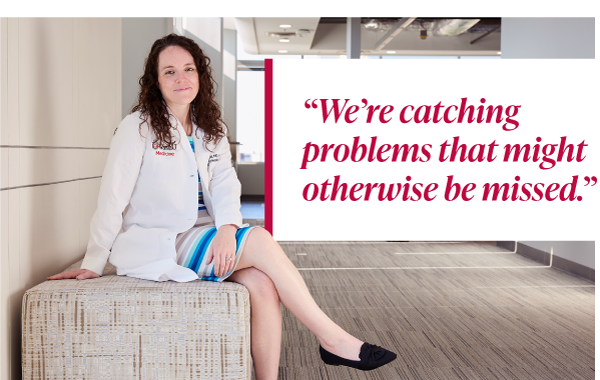
“Because we have a strong combination of highly trained sonographers in rural practices, state-of-the-art equipment at our Carbondale site and technology that lets our specialists read ultrasounds remotely, we’re catching problems that might otherwise be missed,” said Katherine Bligard, MD, assistant professor of obstetrics and gynecology at WashU Medicine, who diagnosed the twins and later led the surgical team. “Earlier diagnosis can make a real difference in outcomes for moms and babies.”
The model is expanding. In Rolla, Mo., WashU Medicine physicians have trained sonographers at Phelps Health Hospital, where specialists have remotely read roughly 4,500 ultrasounds since last year, working with obstetrician Wesley Harden, MD, and other local clinicians. “General obstetrics is not as simple as it used to be, with rising rates of obesity, diabetes, substance abuse and other conditions that complicate pregnancy,” Harden said. “WashU Medicine physicians bring specialized expertise into our communities and provide another layer of support for rural doctors who already manage a lot of complexity.”
Surgery in the womb
When it was time for the twins’ surgery, Jennie and her husband, Jake, traveled to Barnes-Jewish Hospital, where WashU Medicine maternal-fetal medicine specialists — among the few in the country trained to perform fetal surgery — sealed the connecting vessels in a delicate procedure to restore balance to the twins’ circulation.
Jennie opted to stay awake through the four-hour procedure, watching on a monitor as surgeons threaded a tiny camera near the placenta and used a laser to seal the vessels connecting her sons. The team — led by Bligard at the WashU Medicine Fetal Care Center — included fetal-medicine specialists, anesthesiologists and neonatologists working alongside Barnes-Jewish Hospital staff. Within a week, the twins’ blood-flow measurements Jennie had been charting since her diagnosis trended back toward normal.
“It was the most amazing feeling,” Jennie said. “We are forever grateful for our care teams and for the support from our community at home. When the boys are old enough, we will tell them how loved they were before they ever took their first breath.”
The surgery was successful. And for the rest of her high-risk pregnancy — with family, friends and a full-time teaching job waiting for her at home — Jennie didn’t have to keep making that two-hour drive.
What comes next
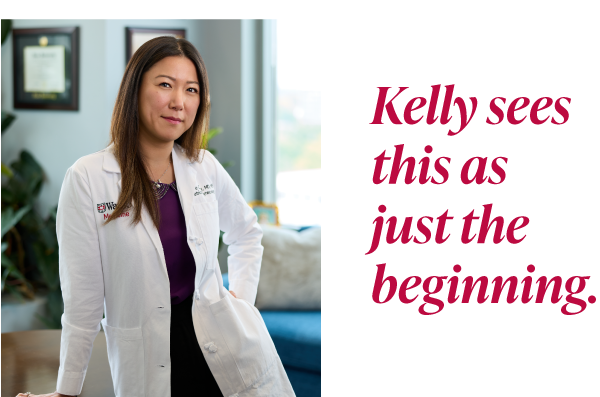
Kelly sees this as just the beginning. Currently, WashU Medicine and Barnes-Jewish Hospital jointly manage 500 high-risk pregnancy patient transfers a year from outlying areas — about 15% of the hospital’s deliveries — and Kelly envisions a future where more of those patients could safely deliver closer to home, with WashU Medicine specialists joining local labor and delivery teams by video. “Traveling far from home to give birth can place an emotional and financial strain on families,” she said. “Telemedicine gives us an opportunity to support hospitals in rural areas, working with local teams to keep more patients close to home on one of the most challenging — and joyous — days of their lives.”
When it was time to deliver, Jennie and Jake made their fifth and final drive to St. Louis. This time, the ride felt different — less fear, more anticipation. Bligard, who happened to be on call that day, delivered two healthy boys — Nathan and Wade — marking a happy end to a pregnancy once filled with uncertainty.
Published in the Autumn 2026 issue