



Juliane Bubeck Wardenburg, MD, PhD, (right) and patient
For over 55 years, the Medical Scientist Training Program (MSTP), WashU Medicine’s integrated dual degree MD and PhD program, has remained true to its mission: train students in medicine and research to become physician-scientists empowered to ask the toughest questions — and pursue the answers to humanity’s most complex health challenges. MSTP graduates are not physicians and scientists, but physician-scientists who view basic science and clinical care as inseparable drivers of medical advancement — one informs the other.
Each day in the pediatric intensive care unit, Juliane Bubeck Wardenburg, MD, PhD, veers between two scientific worlds. The clinician focuses on diagnosis and treatment while the scientist analyzes the cellular, molecular and genetic underpinnings of patients’ medical conditions.
“As a physician-scientist, I am constantly weaving those worlds together,” said Bubeck Wardenburg, the Donald B. Strominger Professor of Pediatrics and director of the Division of Pediatric Critical Care Medicine. “With every patient, I ask myself, ’What don’t I know here? Why is the patient presenting in a certain way? What can I better understand about this patient’s disease?’”
Bubeck Wardenburg helps care for 10 to 15 patients daily in the pediatric intensive care unit at St. Louis Children’s Hospital. Their conditions include traumatic injuries, cancers, infections, rare diseases, immune system disorders and respiratory illnesses.
“Asking questions generates an appreciation of the limitations of our knowledge, which is beneficial as physician-scientists but also humbling,” she said.
“What we think to be the case is often wrong. But being wrong — or having unanswered questions — pushes us to grow by seeking additional information. Knowledge is what advances medicine.”
Failure is the foundation of success
Boldness to take risks in research is ingrained in every physician-scientist trained at WashU Medicine. That might mean summoning courage to forge ahead after an experiment fails and knowing it may fail multiple times before a meaningful result is achieved. Or relying on curiosity, creativity and adaptability to think outside of the box and, when a hypothesis proves incorrect, steer research in new directions. Physician-scientists must be humble, accepting the unknowns and failures in the lab, and being willing to listen to a patient whose condition contradicts textbooks.
Although daunting, acquiring a thick-skinned mental fortitude is intrinsic to a physician-scientist’s success, said David H. Perlmutter, MD, executive vice chancellor for medical affairs, the Spencer T. and Ann W. Olin Distinguished Professor and the George and Carol Bauer Dean of WashU Medicine. “It’s a quality that is hard to teach but is as important as education, research and clinical care,” he said.
“It requires introspection, honesty and self-reliance to develop the courage to be wrong numerous times, yet you persevere anyway because eradicating disease or minimizing its ill-effects are noble goals,” said Perlmutter.
“This is what MSTP is about — preparing our students to tackle the most challenging and daunting problems, to fight through the obstacles and discover the miracles, and then to go on to teach the next generation.”
— David H. Perlmutter, MD
Impact around the world
“We’re everywhere,” said Wayne M. Yokoyama, MD, MSTP director and associate dean of the Division of Physician-Scientists. “Many major medical advancements have ties to our physician-scientists.”
MSTP alumni, faculty and trainees have led or contributed to the development of hundreds of lifesaving medications, including statins to reduce the risk of heart attacks and strokes, vaccines for infectious diseases like COVID-19 and antiparasitic pills to control tropical diseases like elephantiasis. They’ve played a major role in sequencing the human genome and, today, lead groundbreaking research in areas such as the gut microbiome, cancer and neurodegenerative diseases like Alzheimer’s.
MSTP’s alumni network is the nation’s largest, with 800-plus physician-scientists, said Yokoyama, also the Sam J. Levin and Audrey Loew Levin Professor of Arthritis Research. Additionally, more than 80% of alumni are leaders in academic medicine, the pharmaceutical and biotechnology sectors or the National Institutes of Health (NIH).
A history of bench to bedside
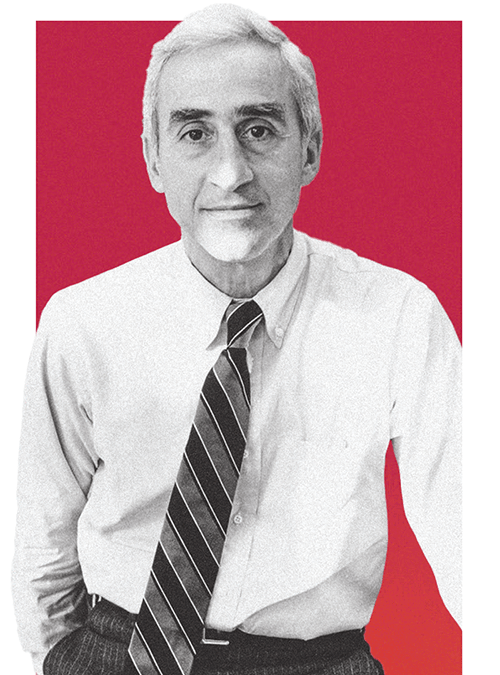
WashU Medicine’s Nobel Prize laureates Gerty and Carl Cori laid the foundation for MSTP in the 1930s and ’40s by inviting clinicians to work in their lab. The wife-and-husband team believed that the best doctors understood disease on a molecular level.
As did P. Roy Vagelos, MD. He founded MSTP in 1969 after succeeding Carl Cori as head of the school’s Department of Biological Chemistry (now the Department of Biochemistry and Molecular Biophysics). The program formalized the school’s physician-scientist training and promoted interdisciplinary collaborations and scientific innovation.
“The Coris established a pattern of physicians working in basic science labs,” Vagelos said.
“I thought, ’Why not here?’ Why not offer medical scientist training at WashU Medicine and make it the strongest in the country? And that’s what we did. WashU was, and remains, one of the world’s great academic and research institutions.”
— P. Roy Vagelos, MD
Vagelos is an internationally renowned physician-scientist and supporter of biomedical sciences and education. After nearly a decade at WashU Medicine, he became the CEO and chairman of Merck & Co., where he directed rapid advances in biomedical research, including the discovery of the statin drugs Mevacor and Zocor, which have been prescribed to millions to lower cholesterol and reduce the risk of cardiovascular disease.
Read more about Vagelos’ lasting impact »
Fostering intellectual inquiry
Each academic year, MSTP aims to enroll 25 new students — all of whom start medical school with their MD classmates, thereby comprising 20% of each entering medical student class at WashU Medicine — a significantly higher percentage than at all other medical schools in the country — thanks to grants from the NIH and funding support from the medical school.
“NIH’s longtime dedication to WashU Medicine speaks to our success as being one of the best, largest and most successful MSTPs in the country,” Yokoyama said. “Our own investment in MSTP reflects the university’s commitment to training future generations of physician-scientists who will contribute to the betterment of medicine and health.”
From day one, the program fuses the depth of medical training with the curiosity-driven rigor of research. Unlike traditional paths, it offers a seamless, flexible curriculum that integrates clinical and scientific education. Students are given time to dive deep into ambitious PhD projects, and work alongside faculty who are not only mentors but pioneers in their fields.
“I was fortunate because the flexibility of WashU Medicine’s MSTP allowed me to chart a unique program of study, one that was rather uncommon back then, combining population biology, genetics and epidemiology,” recalled Edwin K. Silverman, MD, PhD, a 1990 MSTP graduate, pulmonologist and head of the Channing Division of Network Medicine, a research division of Brigham and Women’s Hospital in Boston affiliated with Harvard Medical School. “The scientific principles I acquired as an MSTP student have guided me throughout my career.”
One of WashU Medicine’s greatest strengths is fostering a rigorous intellectual curiosity that encourages medical breakthroughs, added Charles Baum, MD, PhD, a 1987 graduate and chief executive officer at Terremoto Biosciences, a precision oncology company in San Francisco. “It’s a main reason why I chose WashU Medicine over Harvard, Stanford and other programs.”
Baum has achieved national prominence for spearheading the development of lifesaving drugs for patients with nonsmallcell lung cancer, glioblastoma and other cancers for leading pharmaceutical companies including Pfizer, ScheringPlough Research Institute and Mirati Therapeutics, where he served as founder, president, CEO and board member until its acquisition by Bristol Myers Squibb.
“At WashU Medicine, the level of intellectual curiosity meant always thinking about what else you might do to make a difference in advancing science and medicine,” Baum said. “Faculty and peers constantly asked how you could be better. Those questions help develop a certain mindset, a type of confidence.”
Sustained curiosity
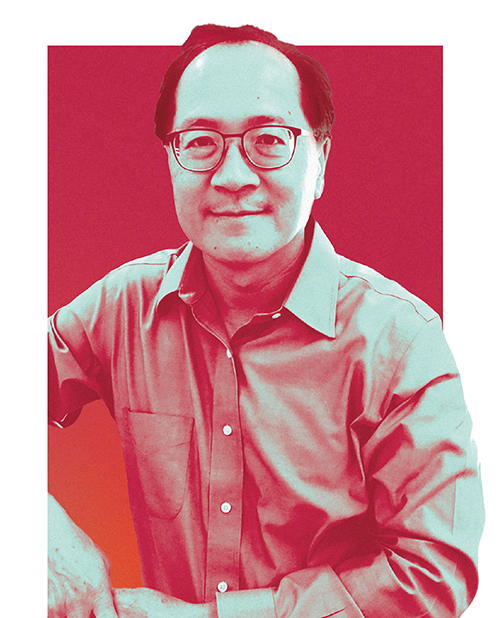
“To be successful, you have to be fully committed and passionate so that when you answer one question, you’re ready to answer the next, and the process of answering questions can be difficult but more often it is satisfying and challenging,” said Andrew Chan, MD, PhD, a 1986 MSTP graduate and senior vice president of research-biology at Genentech, a San Francisco-based biotechnology company known for its innovative therapies to treat cancers, autoimmune disorders and other diseases.
“Having this kind of sustained curiosity can help keep things interesting because you’re always asking, ’Why this, why not that, what’s next?’”
— Andrew Chan, MD, PhD
As a mentor to many — including Bubeck Wardenburg — Chan advises tackling obstacles with inquisitiveness and a critical eye rather than from a place of discouragement. That lesson stayed with Bubeck Wardenburg. A routine case once pushed her to investigate why a healthy 2-year-old was devastated by a common staph infection. “It didn’t make sense, so I asked, ’Why?,’” she said. That question led to a large-scale research study and a vaccine now in development to protect children from staph infections.
In moments like these, MSTP’s mission becomes clear: Train students to be scientists and physicians who challenge assumptions, resulting in curious minds committed to transforming medicine from the inside out.
Dreaming big
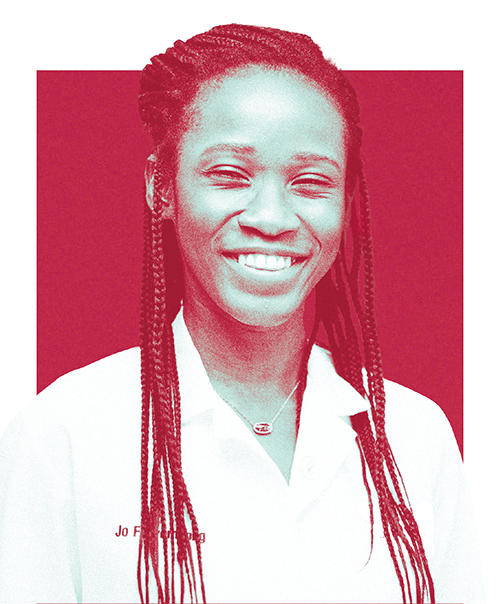
In 2020, Jo Frempong was nearing completion of a two-year post-baccalaureate program at Harvard University. She felt eager to begin applying to MD/PhD programs. An aspiring virologist, Frempong craved an environment conducive to casual and formal collaboration with mentors and professors having a real-world impact.
Most of all, Frempong wanted encouragement to dream big. Her long-term goal is to establish a medical and research institute, focused on viruses and host responses, in her home country of Ghana.
“I sought advice from my colleagues at Harvard about where to do my MSTP,” she said. “A lot of them had attended WashU Medicine or worked with people who had. They said it has the best MSTP.”
Today, Frempong — who expects to earn her MD/PhD in 2029 — is studying host-pathogen responses in the molecular genetics and genomics PhD program and is in the lab of Megan Tierney Baldridge, MD, PhD, an associate professor in the Division of Infectious Diseases in the Department of Medicine. The scientific rigor thrills Frempong, as does developing her thesis on why the rotavirus vaccine is effective in the U.S. but less so in low-income countries such as Ghana.
“This is not an easy process. It’s a lot of hard work and self-discipline. Showing up for yourself constantly. But the process builds in you this kind of I-can-do-anything belief, and it is strengthened by MSTP faculty encouraging us not to limit ourselves in what we can achieve. So, I am dreaming big, knowing that MSTP is the pipeline to making my dream reality.”
— Jo Frempong, MSTP student
Daring to pursue the unknown
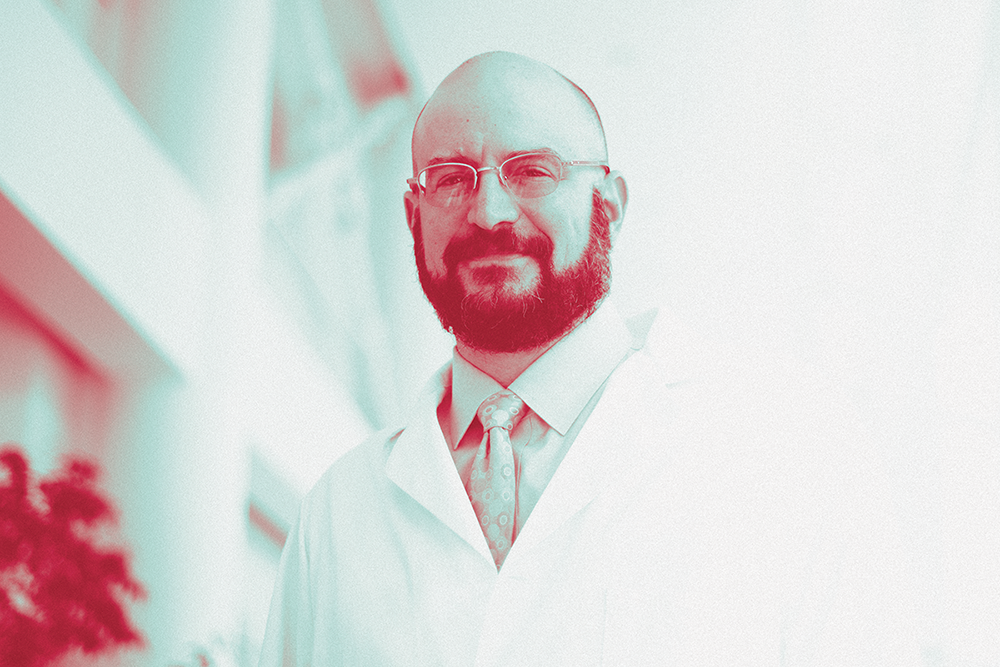
In the late 1980s when Bradley L. Schlaggar, MD, PhD, was a student in MSTP, he was fixated on a question: What would happen if you transplanted part of a developing rat’s brain from one location to another?
At the time, that felt more science fiction than science.
He approached Dennis D.M. O’Leary, PhD, then a new assistant professor in the Department of Neurological Surgery who studied the development of the cortex — the outermost layer of the brain responsible for functions like thinking, learning, memory, emotions and problem-solving, consciousness and sensory perception.
“I wanted to know if a piece of the cortex is hardwired to serve a sole function, such as vision, or if it could be coaxed to take on another function,” recalled Schlaggar.
Schlaggar wasn’t just lucky — he was in the right place. O’Leary had just secured NIH funding to investigate — using transplantation techniques he had established — how the cortex develops. Intrigued by Schlaggar’s shared fascination, O’Leary invited him to join the lab as his first graduate student.
Together, they conducted an experiment that would upend conventional thinking about cortical development: transplanting the developing visual cortex from an embryonic rat into the brain region of a newborn rat that normally processes whisker input. Remarkably, the transplanted tissue adapted to its new role, taking on the characteristics of the whisker-processing region.
The discovery, featured on the cover of Science in June 1991, helped further distinguish WashU Medicine as a leader in neuroplasticity — and serves as a powerful reflection of our enduring commitment to nurturing boundary-pushing physician-scientists early in their careers.
“At WashU Medicine, you can go for it,” Schlaggar said. “MSTP gave me the confidence to ask big questions and the mentorship to pursue them.”
Schlaggar would go on to become a valued physician-scientist at WashU Medicine, with a career spanning nearly 25 years — from residency to professor of neurology, radiology, psychiatry, pediatrics and neuroscience. Today, he is president and chief executive officer of the Kennedy Krieger Institute in Baltimore, which focuses on children and adults with neurodevelopmental disorders through clinical care, education and research.
“Being a physician-scientist is baked into the culture at WashU Medicine,” Schlaggar said. “I embraced the role then, and I still do — because it’s how we translate discoveries into better care and real-world impact.”
Published in the Autumn 2025 issue