


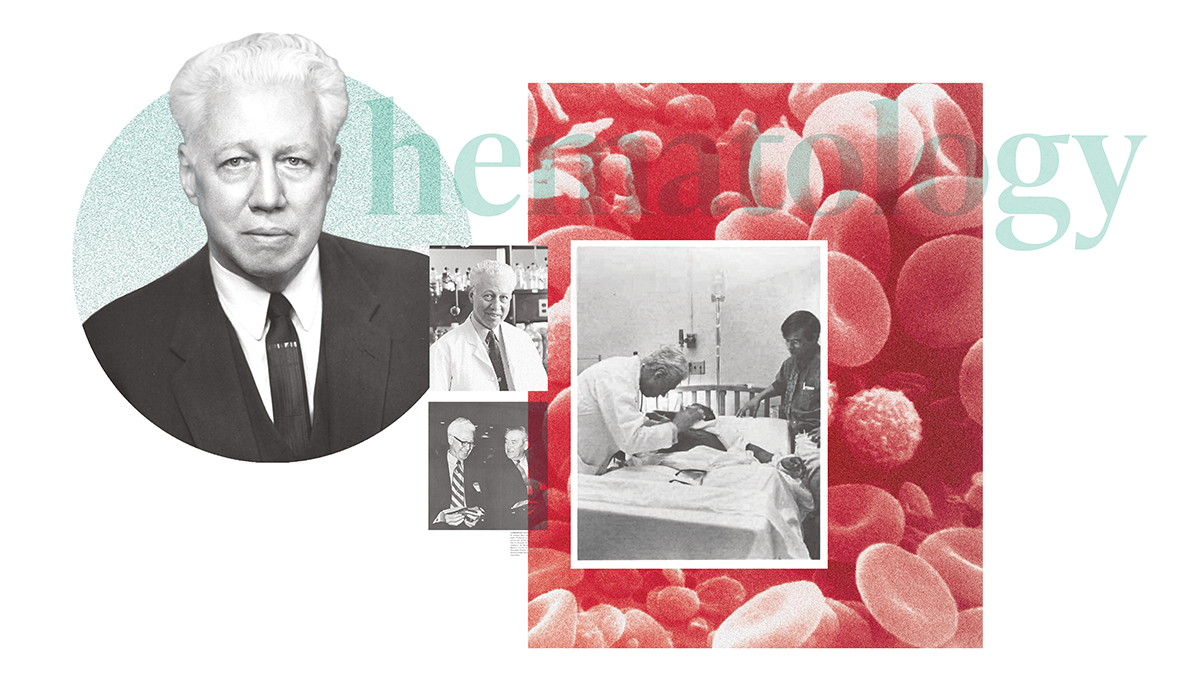
At WashU Medicine: 1938-1972
Founding head of the Division of Hematology, chair of the Department of Medicine and dean of WashU Medicine
Carl V. Moore, MD, was a visionary whose future-forward thinking helped transform both hematology and academic medicine. In 1938, the St. Louis native and WashU Medicine alum established one of the nation’s first hematology divisions, creating a model of research-driven, patient-centered care that still guides the field today.
He believed deeply in uniting science and medicine, famously declaring, “Basic science is much too important to be left to the basic scientists.” Long before “bench to bedside” became a research principle, Moore modeled it — mentoring a generation of physician-scientists and insisting that the best care must be grounded in discovery.
His laboratory became an international training ground, producing 12 future hematology division chiefs and numerous deans and department chairs across the U.S. Known for his humility, warmth and integrity, Moore often put himself at the center of early research — including injecting himself with patient serum while investigating blood disorders and transfusion safety in order to avoid testing experimental treatments on patients.
Moore’s work in iron metabolism and dangerous blood conditions such as thrombocytopenic purpura and sickle cell disease expanded understanding of blood disorders and advanced therapeutic approaches. Nationally, he helped modernize blood bank protocols with the American Red Cross and advised the National Cancer Institute on the use of chemotherapy agents and blood cancer research.
Moore’s vision, values and scientific legacy continue to grow in reach and impact — carried forward by the leaders he trained, the science he advanced and the institution he helped build.
Published in the Autumn 2025 issue