


The future of medicine requires physicians who can adapt to increased complexity, connect with patients on a more personal level and lead change in a constantly evolving healthcare landscape.
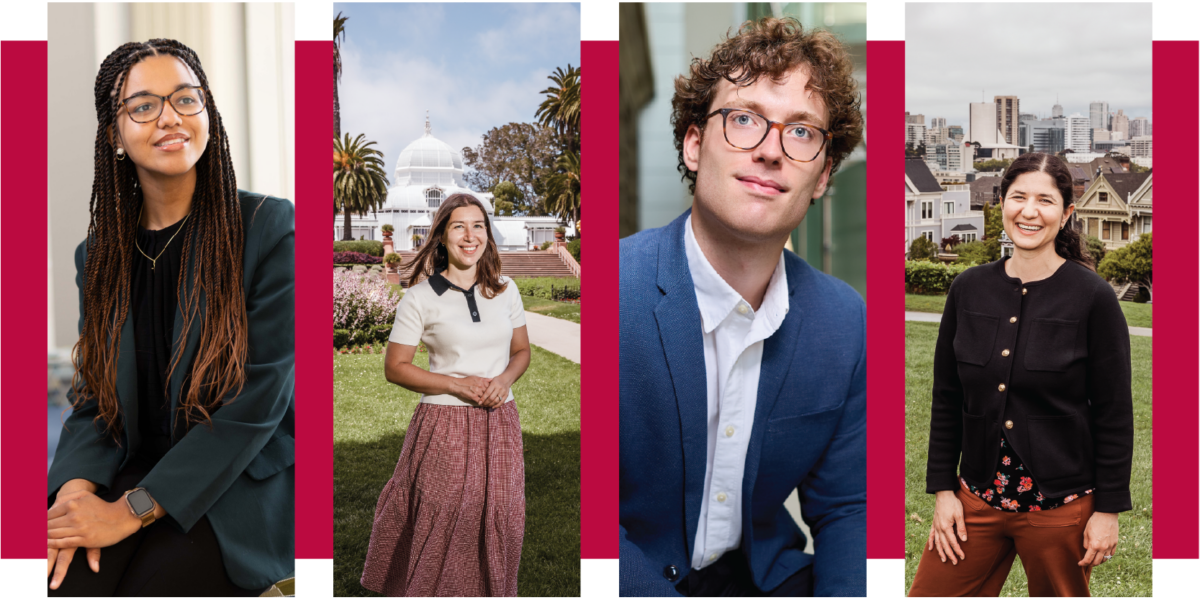
Recognizing that challenge, WashU Medicine launched the Gateway Curriculum in 2020, marking the first reenvisioning of its MD program in more than two decades while redefining what medical education can be. Designed to connect the classroom and the clinic from the start, Gateway integrates basic science, clinical training, mentorship and community engagement into a more personalized and meaningful educational experience that prepares students to shape medicine’s future.
A signature of the curriculum is the EXPLORE program, a component that guides students along individualized pathways in advocacy, education, innovation or research. The program empowers learners to discover their academic purpose while developing the skills modern medicine demands.
“By immersing students early in patient care, engaging them in communities and supporting their growth through longitudinal coaching and the EXPLORE program, we are equipping them not just to succeed in today’s health system, but to transform the one that comes next,” said Eva Aagaard, MD, vice dean for education and the Carol B. and Jerome T. Loeb Professor of Medical Education. “We’re shaping them into doctors who listen deeply, think critically, communicate clearly and act with compassion in every patient encounter, and also teaching them ways they can shape the future of health.”
Sharon Abada
Creating a curriculum where students shine
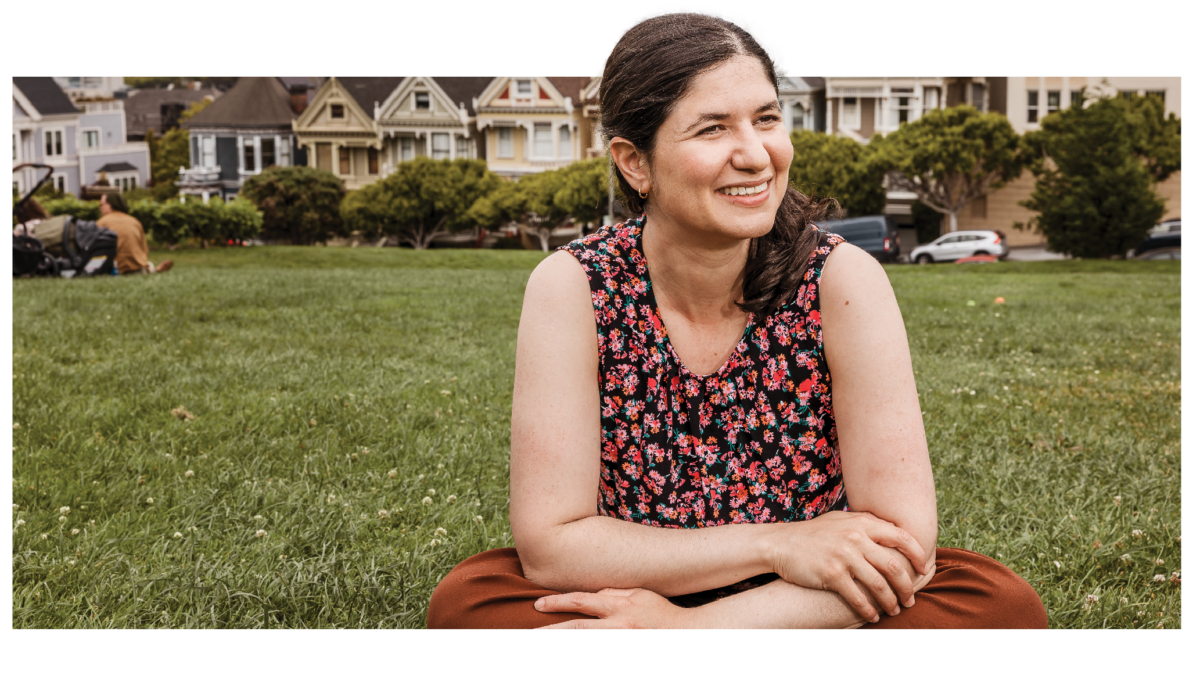
Rheumatologist Sharon Abada, MD, trained at WashU Medicine before the Gateway Curriculum launched. But fortuitous timing meant she was able to take part in shaping the evolution of medical education at WashU Medicine — and in turn, the experience helped shape her into the physician she wanted to be.
Abada trained under a traditional curriculum used by most U.S. medical schools: two years of learning the basic sciences, including human anatomy and physiology, pathology and pharmacology, followed by two years of clinical rotations. During her second year of medical school, in 2019, leaders in the Office of Education asked her to serve on a student committee to help design a new curriculum.
“The traditional curriculum was rigorous and successful,” said Abada, now a clinical assistant professor and clinician educator at Stanford University. “But it was clear that medicine and medical education were changing and we needed to adapt.
“There were really important, responsible people in a room and then us medical students at the same table,” she said. “That was meaningful. It showed me that our insider knowledge about how students think was valued.”
Student groups, along with faculty groups, presented schematics that addressed questions such as: How long should preclinical training last? When should students enter clinical immersions? Where does the United States Medical Licensing Examination fit in?
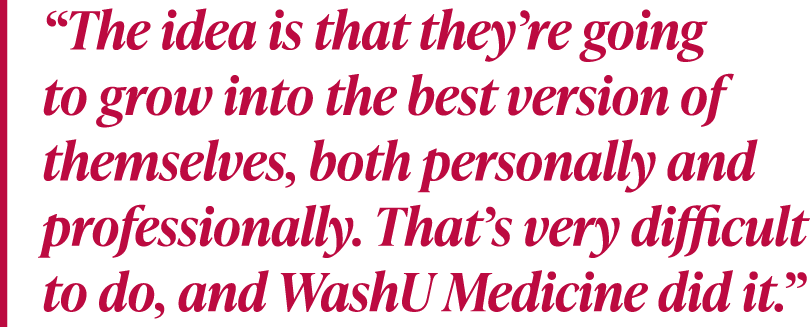
The students’ suggestions, such as early clinical exposure, became an integral part of the Gateway Curriculum.
For Abada, the process was transformative. “I felt very welcome in a space that I didn’t think I belonged in,” she said. “It built my confidence that I had a voice that mattered and could be part of creating something for future generations.”
At Stanford, she continues her passion for teaching and clinical care by building her career as a clinician educator.
“What’s remarkable is that WashU Medicine’s curriculum allows every student to shine in the way they’re meant to shine,” Abada said. “The idea is that they’re going to grow into the best version of themselves, both personally and professionally. That’s very difficult to do, and WashU Medicine did it.”
Abada graduated from WashU Medicine in 2021 and completed her internal medicine residency and rheumatology fellowship at the University of California, San Francisco (UCSF). She was appointed to her faculty role at Stanford in 2026.
Sam Fallon
The moment that changed everything
During his last year of medical school, in 2026, Sam Fallon, MD, had a moment when he felt as if he had grown from medical student to junior doctor.
He was on an advanced clinical rotation in the emergency room at Barnes-Jewish Hospital caring for a patient with uncontrolled, intense pain caused by his terminal cancer. The patient asked Fallon about hospice.
A month earlier, Fallon had taken an in-depth elective on hospice and palliative care. “I found myself directly drawing upon the skills I had learned,” Fallon said. “Although talking to a dying patient is never easy, I felt confident because the course included extensive practice of having sensitive end-of-life conversations with patients.”
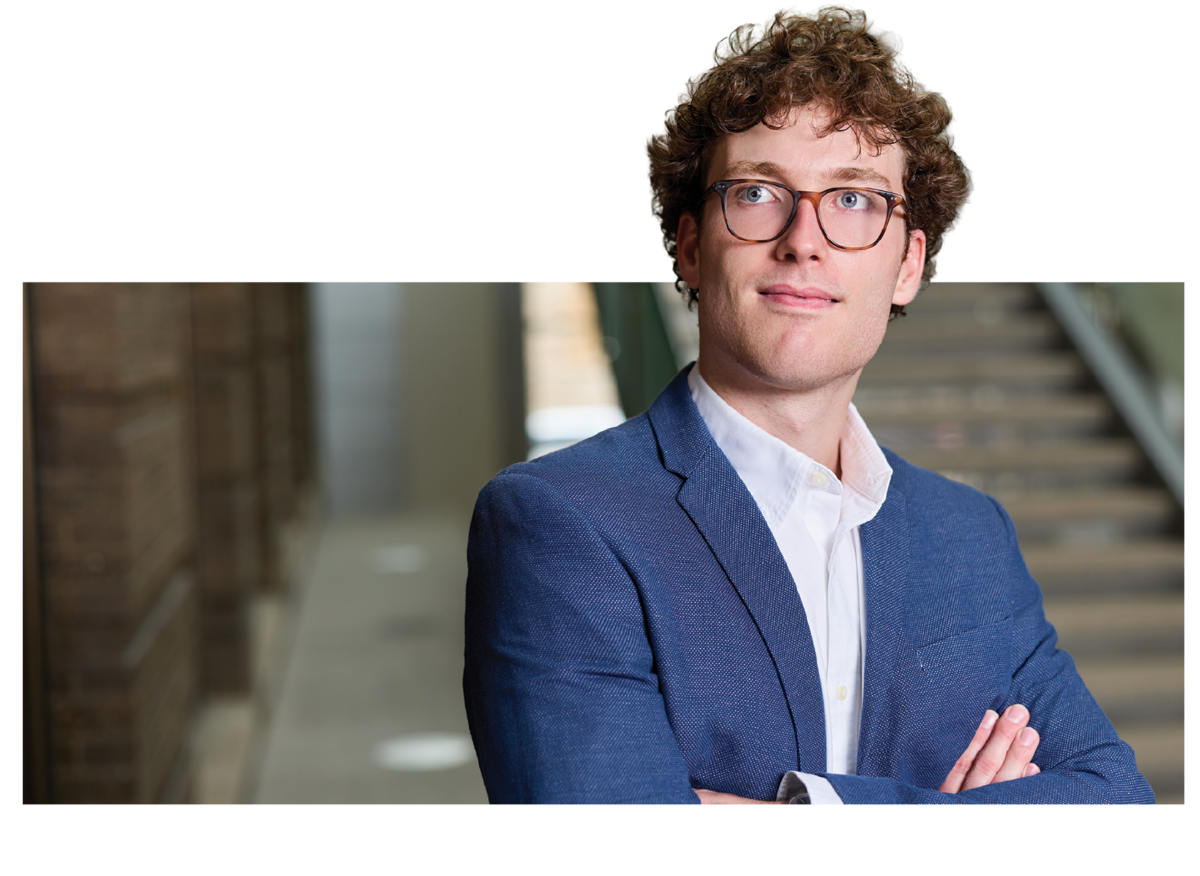
Known as Keystone Integrated Science Courses, the two-week to four-week specialized classes are taken during the final phase of the Gateway Curriculum. Students can select from more than a dozen courses that integrate knowledge about basic science, clinical medicine, health systems and societal effects of emerging health topics.
For his other integrated science course — students are required to take two — Fallon learned about opportunities for renewed hope for those with failing hearts, livers and other organs. The class on transplant immunology — a growing field he plans to pursue — focused on the rapid advances in drug therapies and surgical procedures.
“Transplantation is one of the few interventions in medicine where you can quite literally give someone a decade or more of life they otherwise wouldn’t have had,” Fallon said. “I’m still in awe when I think about how you can take a failing heart or liver, replace it and watch someone get their life back.”
The transplant course blended high-level clinical exposure with detailed classroom teaching. In the mornings, Fallon joined liver and heart transplant teams on rounds, assisting pre- and post-transplant patients.
During afternoons, Fallon shifted to small-group sessions led by WashU Medicine’s nationally recognized transplant surgeons and physicians, and researchers studying transplanting an animal organ into a human. Fallon learned all about gene-editing strategies to make a pig-to-human organ transfer into a clinical reality.
“The field is evolving and looking at things in new ways,” Fallon said. “Being on the cutting edge of discoveries and patient care excites me. And the combination of intensive, tailored bedside experience plus advanced, faculty-driven science seminars — delivered specifically for medical students but at a level for residents or fellows — have prepared me for residency and beyond.”
Fallon graduated from WashU Medicine in 2026 and is an internal medicine resident at Vanderbilt University Medical Center in Nashville.
Leah Tolby
Finding her purpose
After graduating college, Leah Tolby, MD, knew she wanted to be a doctor like her father. But she felt unsure about what she wanted to do in medicine.
Tolby envisioned herself in a white coat guiding patients through a health crisis with expertise and empathy. But curiosity was also prodding her into medical research, where she could help dismantle disease in a lab. Then again, teaching was also a passion — education was her undergraduate minor, after all.
The built-in flexibility of the Gateway Curriculum gave Tolby the freedom to explore all three.
Like her classmates, she gained early clinical exposure that allowed her to experience various specialties. She liked the intellectual challenge of caring for patients with interconnected illnesses in the intensive care unit (ICU), while also building meaningful relationships with patients. One woman even invited Tolby to participate in her wedding.
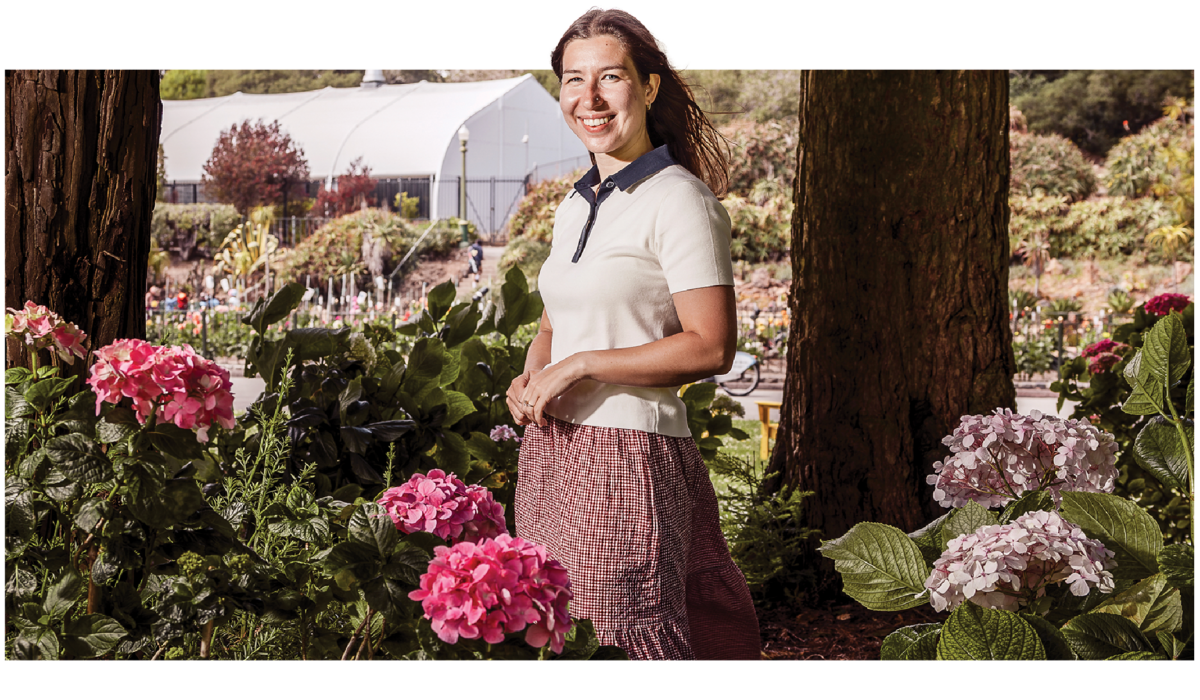
“As medical students, we have the gift of time,” Tolby said. “Residents and attendings are juggling so many responsibilities that they can’t always sit at the bedside for long, but students can. Spending that extra time getting to know patients helps the healthcare team with decision-making and reminds us why we’re doing this in the first place.”
Caring for ICU patients also piqued her interest in better understanding disease process and organ interaction. After consulting with her mentors, Tolby customized an EXPLORE elective that allowed full-time immersion in a basic science lab for four months without worry of assignments or other obligations.

She joined the lab of Andreas Herrlich, MD, PhD, a professor of medicine and director of translational medicine in the Division of Nephrology. His research revolves around interorgan crosstalk, which refers to how an injury in one organ can ripple through to others.
Tolby’s research focused on how acute kidney injury can harm the lungs.
“Basic science in the lab takes a lot of time, and it’s hard to get this level of concentrated research during residency,” said Tolby, acknowledging that the experience helped cement her decision to specialize in critical care and pulmonology, along with a desire to conduct clinical and translational research.
The curriculum’s flexibility also enabled Tolby to pursue her other interest: medical education. During her first year, she selected EXPLORE’s education pathway, which introduced her to the fundamentals of curriculum design and medical education research. Her interest in academic medicine led her to the Office of Education, where she helped assess when students should take the United States Medical Licensing Examinations. “Dr. Aagaard and faculty listened to our feedback and concerns,” she said.
“I entered medical school knowing I wanted to be a physician,” Tolby said. “But the Gateway Curriculum helped me figure out the kind of doctor I want to be at a patient’s bedside, in the lab and in the classroom.”
Tolby graduated from WashU Medicine in 2026 and is a resident in internal medicine at UCSF Medical Center.
Victoria Ogbeifun
The legacy continues
Victoria Ogbeifun’s top criteria in choosing a medical school was its level of commitment to underserved patient populations, such as immigrants and refugees. While many schools also touted it as a top priority, WashU Medicine showed Ogbeifun its dedication through the Gateway Curriculum.
During faculty interviews and a campus visit, Ogbeifun saw how community engagement was threaded throughout students’ studies. The school’s commitment echoed in the raw history lessons about the closure of historically Black hospitals in St. Louis and challenges to accessing tertiary care in rural communities in Missouri and Illinois. She felt excited by the student-led community outreach projects that weren’t treated like a checkbox but rather a way of life.
The clear alignment between the curriculum and her values convinced Ogbeifun, now a third-year medical student, to train at WashU Medicine.
“I grew up seeing patients from marginalized communities being ignored or dismissed in healthcare,” said Ogbeifun, referring to the underserved patients in rural southwest Missouri, where she was raised.
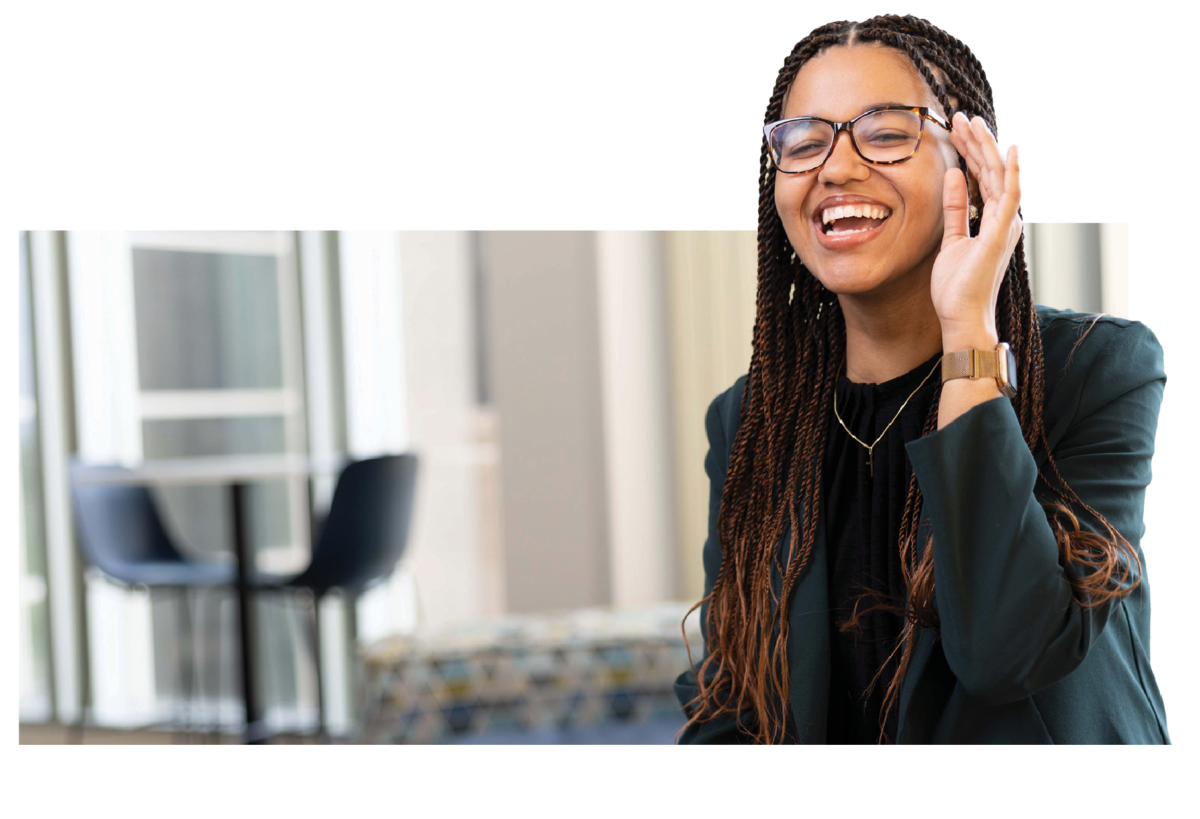
As a child, she immigrated with her family to the U.S. from Germany. She found herself acting as a translator for her mom, who spoke Croatian, while also managing family doctor appointments.
“That was my first exposure to healthcare,” Ogbeifun said. “I wanted to be the kind of physician who becomes a part of the community I serve, who doesn’t just show up when it’s convenient but stays, listens and builds trust. I learned early on how important it is to meet people where they’re at and make them feel seen and heard.”
The Gateway Curriculum’s EXPLORE program has provided a roadmap to achieving her goals: structured and protected time, faculty mentors and professional development to pursue global health and advocacy.
EXPLORE provided the impetus for Ogbeifun to serve as an English as a Second Language teacher to high school girls for Archway Refugee Connections, a nonprofit supporting refugee families in St. Louis. Ogbeifun also helped lead efforts to translate online resource guides into multiple languages for non-English speakers served by the Criminal Justice Mission, a nonprofit assisting people with criminal backgrounds.
Ogbeifun’s mentors at the medical school encouraged her to turn an observation into action. When she arrived in St. Louis, she had to blindly email nonprofits to find a place where she could volunteer. She wondered why the process was so difficult.
Her mentors directed her to Heather Hageman, MBA, director of the WashU Medicine Community Engagement Hub and Office of Collaboration for Interprofessional Education, which fosters teamwork across health professions. Together, they created an online repository of St. Louis-area nonprofits where students have had impactful, positive experiences. Now live and accessible to all, the Community Engagement Hub makes it easier for students to find and collaborate with trusted community partners.
“Community engagement isn’t an optional add-on for me — it’s central to the kind of physician I want to be,” Ogbeifun said. “WashU Medicine’s curriculum is helping me turn my vision into action.”
Ogbeifun is on track to graduate in May 2028 and plans to apply for a residency in emergency medicine.
Published in the Autumn 2026 issue