


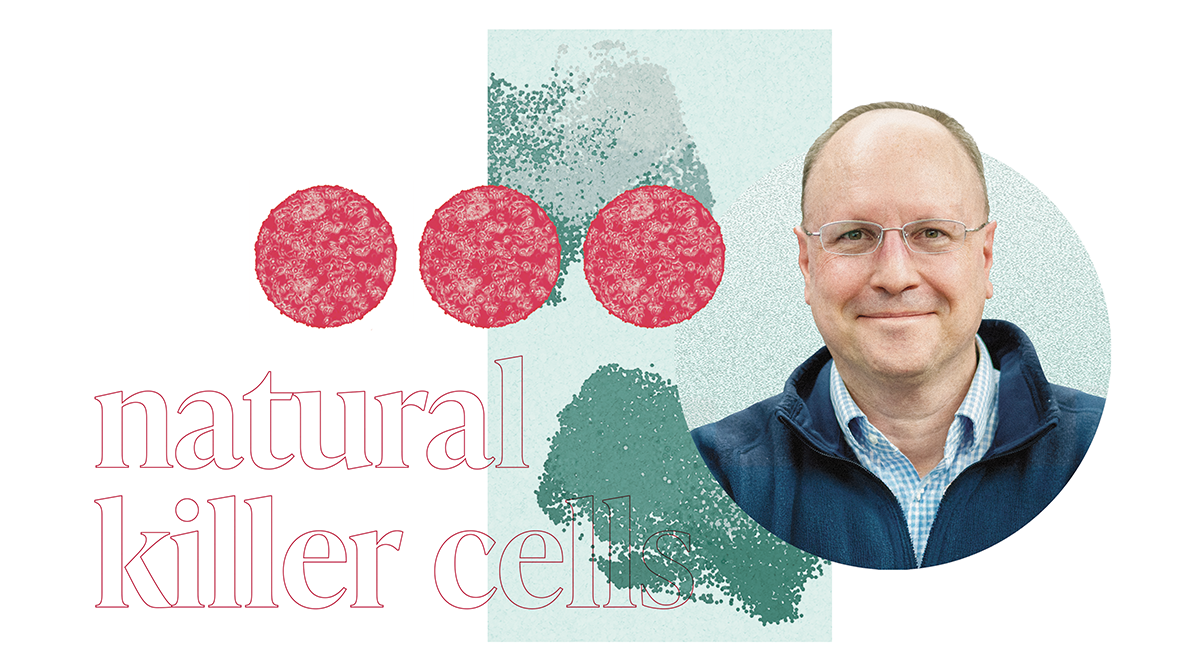
At WashU Medicine: 2008-present
Professor of Medicine in the Division of Oncology and co-leader of the Hematopoietic Development and Malignancy Program at Siteman Cancer Center
Harnessing the immune system to fight cancer has transformed oncology — and Todd Fehniger, MD, PhD, is at the forefront of that transformation.
Fehniger and colleagues discovered how to supercharge natural killer (NK) cells, a type of immune cell that serves as the body’s first line of defense. Unlike T cells, which the body adapts to recognize a specific target, NK cells respond quickly and more broadly. Wondering whether this natural versatility could be amplified to give patients an edge against cancer, Fehniger and his team exposed NK cells to cytokines — small proteins that act as messengers to activate and direct immune responses — and in doing so, created “memory-like” NK cells that remember this activation and respond with even greater strength against cancer cells.
As Fehniger explains, “It’s like sending the NK cells to boot camp — once trained, they have better targeting and a more powerful attack strategy.”
This groundbreaking approach, first tested in patients with leukemia at Siteman Cancer Center, based at Barnes-Jewish Hospital and WashU Medicine, has brought new hope to those with some of the most aggressive and treatment-resistant blood cancers.
Now, Fehniger is working to expand the promise of NK cell therapy by demonstrating that these enhanced cells also target solid tumors such as melanoma, and by using genome engineering to further enhance their cancer fighting abilities.
As a co-founder of Wugen, a WashU biotech startup developing next-generation, cell-based immunotherapies, he is translating discoveries in the lab to real-world treatments.
Published in the Autumn 2025 issue