


At WashU Medicine: 2014-present
The Alan A. and Edith L. Wolff Professor of Cardiology and Medical Scientist Training Program Class of 2008
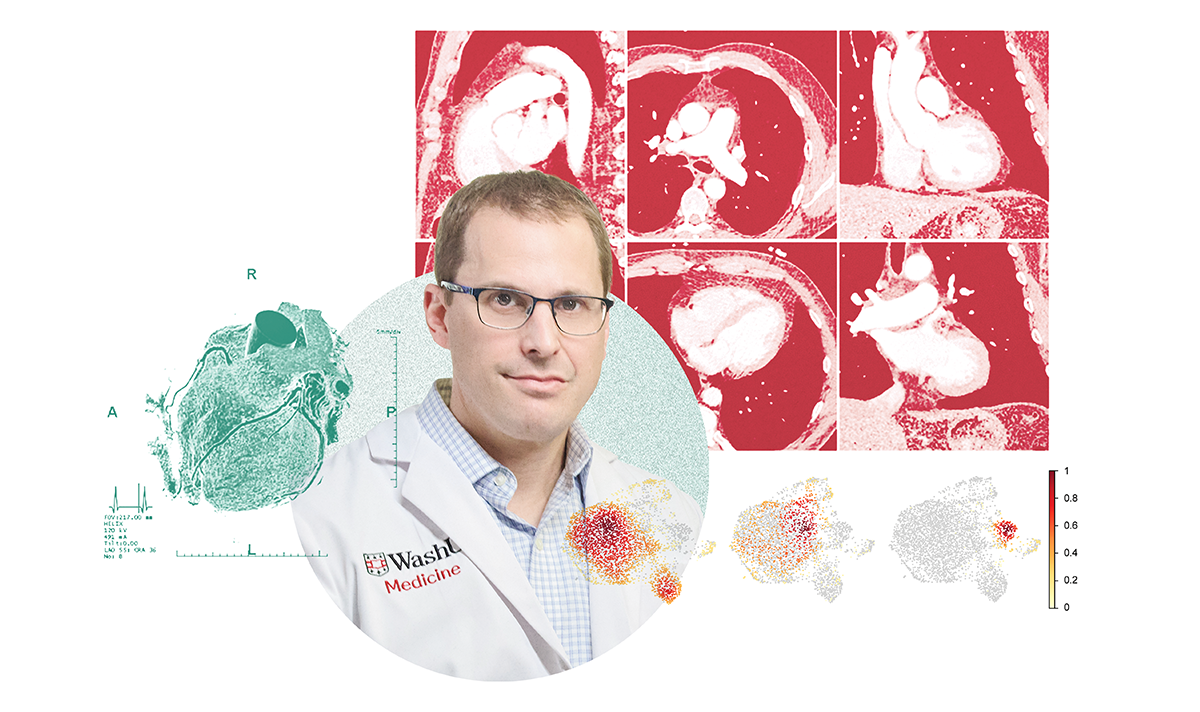
Few health conditions are as common as heart failure. For Kory Lavine, MD, PhD, confronting this global challenge is both a scientific pursuit and a personal mission.
As a cardiologist and scientist, Lavine is pioneering therapies that move beyond managing symptoms to actively curing heart disease. His research is transforming how we understand heart failure by revealing an unexpected player in the process: the immune system.
Lavine’s work began with a simple question: Why does the heart sometimes recover after an injury, such as a heart attack, while other times it deteriorates and leads to heart failure?
He and his team discovered specialized immune cells, found only in the heart, that determine whether the organ scars or regenerates. These insights are now driving a new frontier in treatment — immune-based therapies that reduce harmful inflammation, prevent scarring that leads to heart failure and support lasting recovery.
“Current treatments relieve symptoms and slow progression, but there’s a tremendous need for therapies that stop heart failure at its source,” Lavine explains. “Our goal is to halt disease progression and promote true healing.”
For the 64 million people living with heart failure — many with no treatments that can reverse the damage — this immune-based strategy offers a bold new path, targeting the disease at its roots and echoing the success of immunotherapies used for cancer and autoimmune diseases.
Together with collaborators in the Department of Radiology, Surgery and Medicine, Lavine’s team is already changing how researchers view cardiovascular disease. If successful in clinical trials, their work could revolutionize care for millions of patients.
Published in the Autumn 2025 issue