Our physician-scientists listen deeply, investigate thoroughly and bring answers to the unknown — never giving up until they’re able to deliver breakthroughs that improve our patients’ lives.
It started with leg pain. The minor ache was easy to dismiss as a sign of approaching middle age. Rickey Malloy, then 39, was working full time and raising three active sons with his wife, Jenny. A little muscle fatigue didn’t seem like a big deal until one day Rickey was tying his shoes and noticed his right calf was substantially smaller than his left.
That’s when he knew something was seriously wrong.
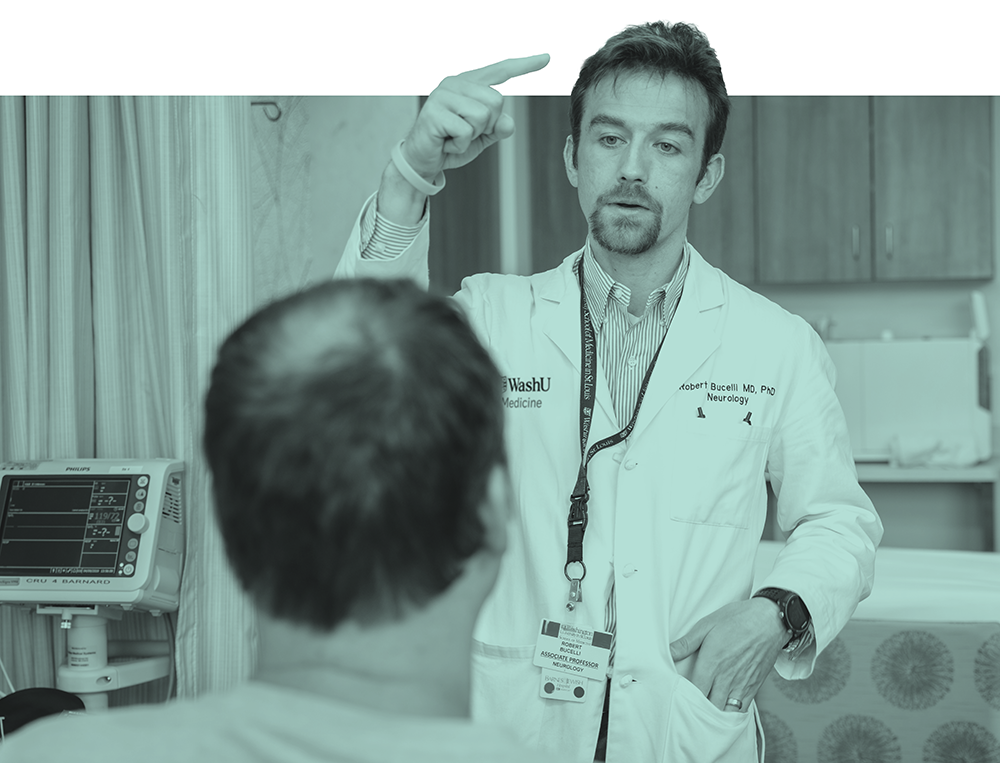
Desperate for answers, the Malloys were referred from specialist to specialist for over a year without making any real progress. After a neurologist diagnosed the problem as a pinched nerve in Rickey’s back, he received months of physical therapy but felt no improvement. Instead, his condition was worsening. Feeling like they were running out of time, Jenny called WashU Medicine where they were connected with Robert Bucelli, MD, PhD, a neurologist who specializes in neuromuscular disorders, for additional testing.
Robert Bucelli, MD, PhD
DNA testing confirmed the diagnosis the Malloys had been dreading — amyotrophic lateral sclerosis (ALS). Also known as Lou Gehrig’s disease, the neurodegenerative condition kills nerve cells responsible for vital functions such as moving, eating, swallowing and breathing, leaving those with the disease an average life expectancy of two to five years.
For over a decade, Bucelli has had to deliver this devastating news with little hope to offer families. That is, until just a few years ago. “Shortly after I got my test results back, I received a call from Dr. Bucelli about this new drug tofersen,” Rickey recalled. “At that point, I was willing to try anything. I needed to be around for my wife and kids.”
This new drug was built on over two decades of research led by Timothy M. Miller, MD, PhD, the David Clayson Professor of Neurology, and today some physicians are actually seeing improvements in their ALS patients.
Patients drive discovery
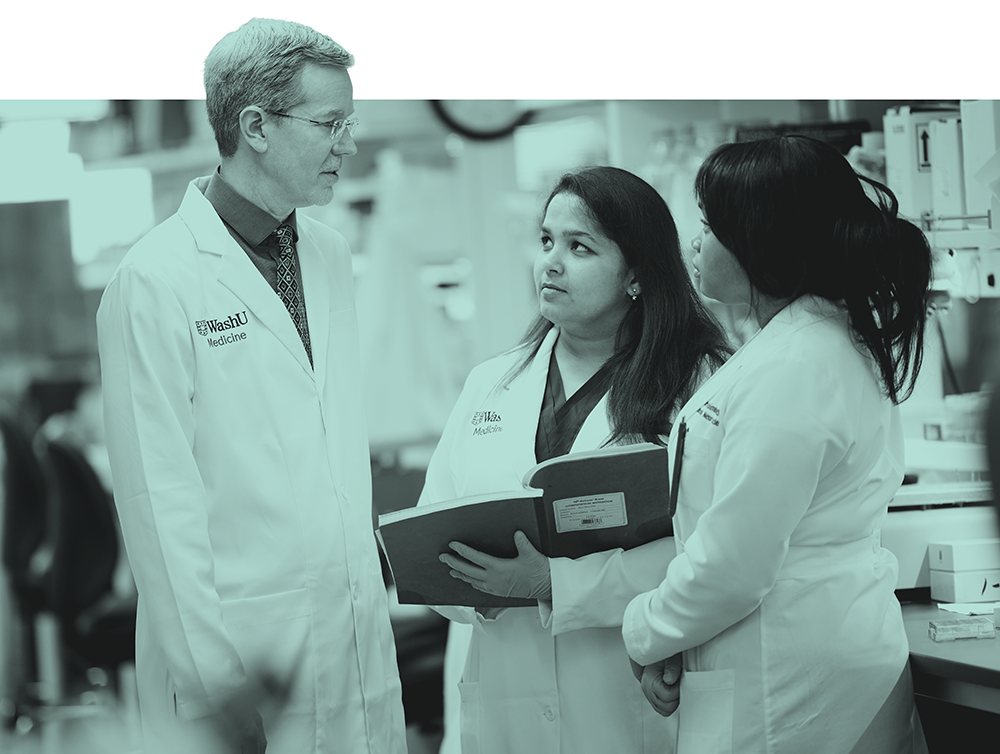
Timothy M. Miller, MD, PhD (from left), Aishwarya Nambiar and Aderonke Abimbola
Miller has been studying neurodegenerative diseases since he was a student in the Medical Scientist Training Program at WashU Medicine, where his mentors reinforced that physician-scientists serve the patients.
As a postdoctoral trainee over 20 years ago, Miller gave a talk focused on an inherited, rare form of ALS involving a toxic mutation in the gene superoxide dismutase 1 (SOD1). He never forgot the woman who forged through the crowd to see him afterward. “I have SOD1 ALS,” the woman said. Then she unpeeled her sticky name tag and placed it on Miller’s chest. “Remember me,” she said.
Miller saved the woman’s name tag.
“Patients motivate me,” said Miller, also co-director of WashU Medicine’s ALS Center. “I listen to each one and truly think about their experiences. I bring their insights into the lab because it might provide clues about causes of disease and potential therapies.”
That emphasis on improving patients’ lives fueled Miller’s bold efforts to treat ALS in a new way — using antisense oligonucleotides, molecules that block production of the toxic protein that causes SOD1 ALS. This rare type is what Rickey has, and thanks to Miller’s efforts, there’s now hope for these patients.
Miller led the international clinical trials that showed tofersen, which is now approved by the U.S. Food and Drug Administration, can slow or stabilize the degeneration typical of ALS. Some SOD1 ALS patients treated with tofersen — including Rickey — have even shown unprecedented gains in strength and mobility never thought possible.
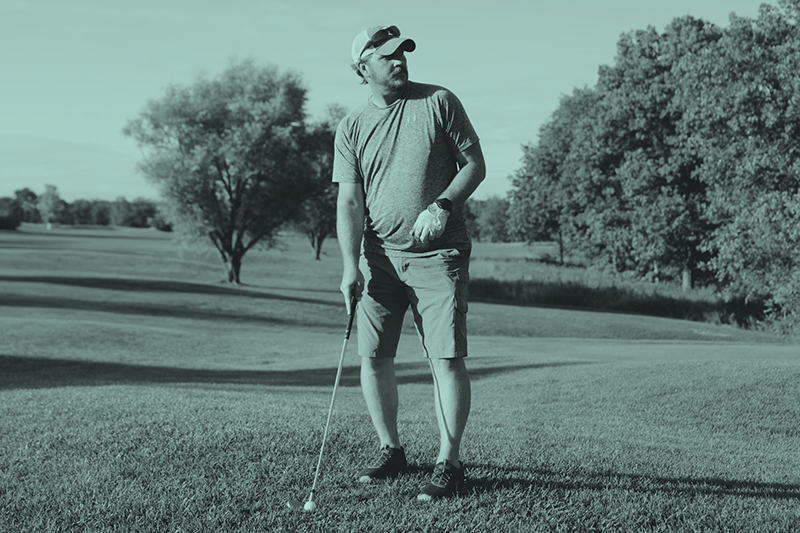
“It’s a miracle that I’m still living my normal life,” said Rickey, who had reached a point where he couldn’t climb a flight of stairs but is now back to working on improving his golf game and proudly cheering his sons on from atop bleachers. “Toferesen hasn’t let ALS hold me back.”
The courage to challenge conventional thinking
“There’s variability in patient response to this drug — it’s not a panacea — but for those patients who do have this substantial response, the fact that they’re able to maintain the independence they had when they went on the drug is a miracle in and of itself,” Bucelli said.
“We thought this couldn’t happen with ALS, but this shows it’s possible. So then if this is possible, maybe anything is possible.”
— Robert Bucelli, MD, PhD
Both Miller and Bucelli are careful to maintain realism about the speed at which new therapies can move from bench to bedside but they have dedicated their careers to treating a disease that was thought to be untreatable. Now they are beginning to see the results of their tenacity and of the contributions and bravery of clinical trial participants.
“Unfortunately, we did not have options for many early patients,” Miller said. “But for family members who may have the SOD1 mutation, we now have a therapy that can have a substantial impact. And we’re going to keep moving as fast as we can. I believe ALS can be a treatable disease.”